Vincent MacKay
Postdoctoral Scholar, MIT Kavli Institute
I'm a postdoctoral scholar at the MIT Kavli Institute for Astrophysics and Space Research.
My main research interest is observational cosmology, with a focus on instrumentation and data analysis for radio telescopes. I work on experiments aimed at charting the history of the Universe by mapping the faint radio glow of hydrogen across cosmic time. Some of the instruments I work on are also capable of detecting fast radio bursts (FRBs), mysterious radio signals of misunderstood nature that mostly originate from outside of our galaxy.
I completed my PhD in Physics in 2023 at the University of Toronto's Dunlap Institute for Astronomy and Astrophysics. In 2018, I obtained my Bachelor's degree in Mathematics and Physics at McGill University. Before that, I completed a Bachelor of Music in piano performance at the Conservatoire de musique de Québec. Despite not pursuing a professional career in music, it remains my main hobby and I play every day!
Apart from research and music, I enjoy the outdoors (rock climbing, hiking, cycling), cooking, and watching horror movies with friends.
Research
I am an active member of the HERA and CHORD collaborations, and have previously contributed to CHIME and HIRAX. You can find my publications on Google Scholar.
Complete uv Coverage
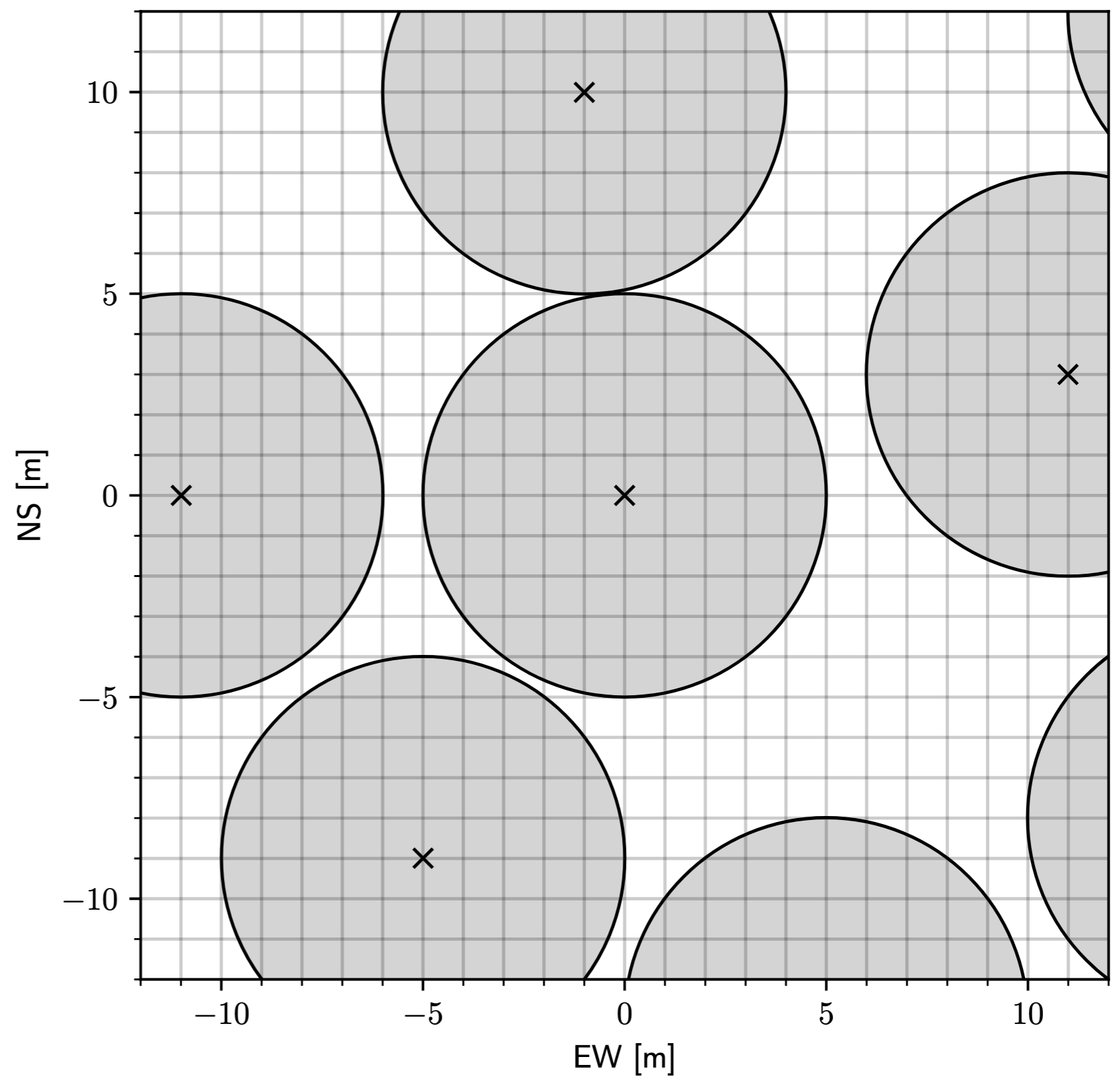
Radio interferometers sample the Fourier transform of the sky in the uv plane. Incomplete sampling leads to imaging artifacts and overwhelms the 21 cm cosmological signal with foregrounds. I demonstrated that antenna layouts achieving complete uv coverage are feasible with a realistic number of antennas, and wrote the RULES algorithm to find such layouts from user-defined constraints. I showed that these arrays fully suppress the foreground wedge. Published in The Astrophysical Journal (2026).
Mutual Coupling
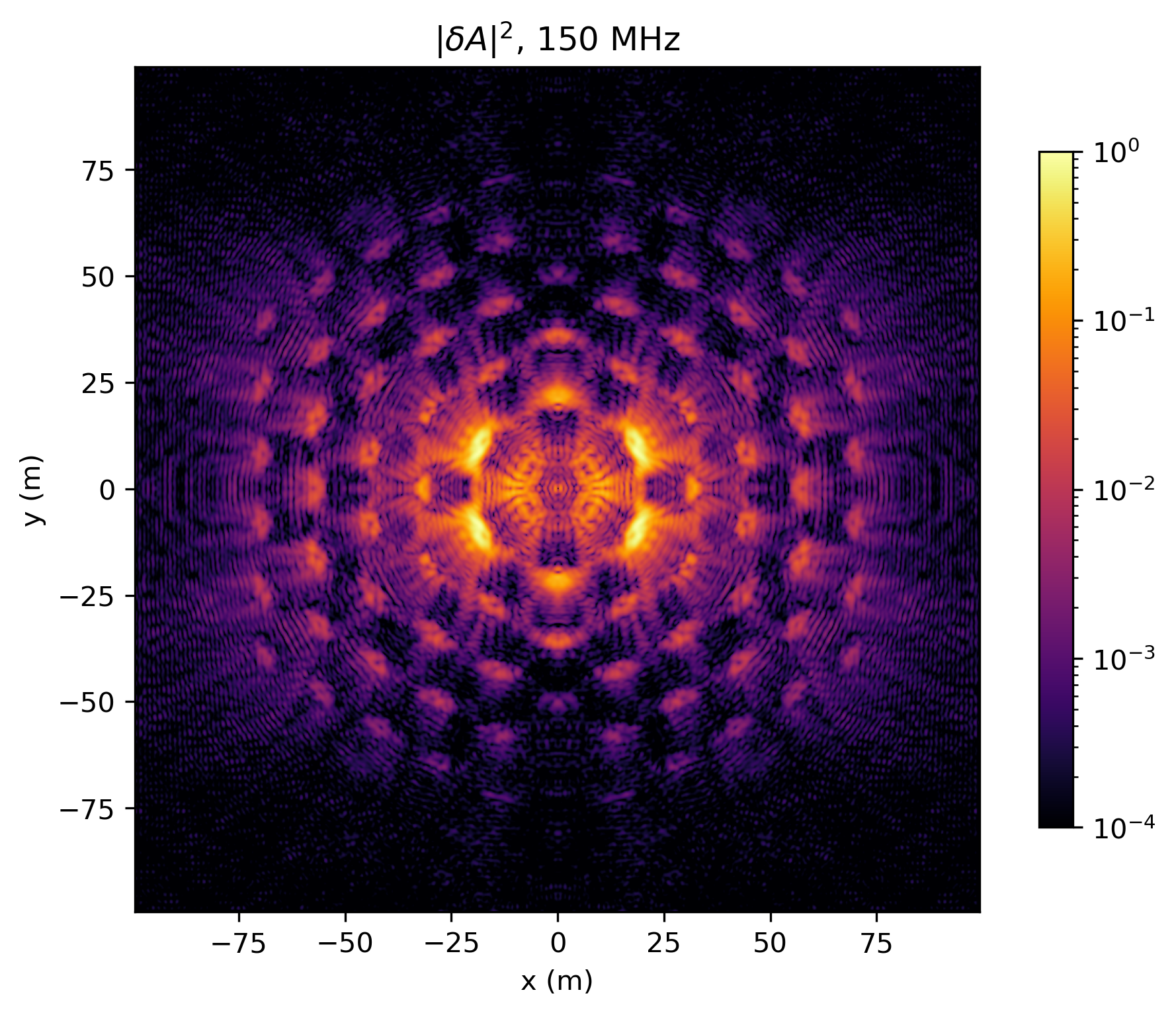
When antennas are placed close together in a radio array, electromagnetic coupling between them distorts the measured signals and complicates calibration. I work on characterizing and mitigating mutual coupling effects in dense interferometric arrays, with applications to 21 cm cosmology experiments like HERA and CHORD. See the arXiv preprint (submitted to The Astrophysical Journal on October 18, 2026).
Feed Design
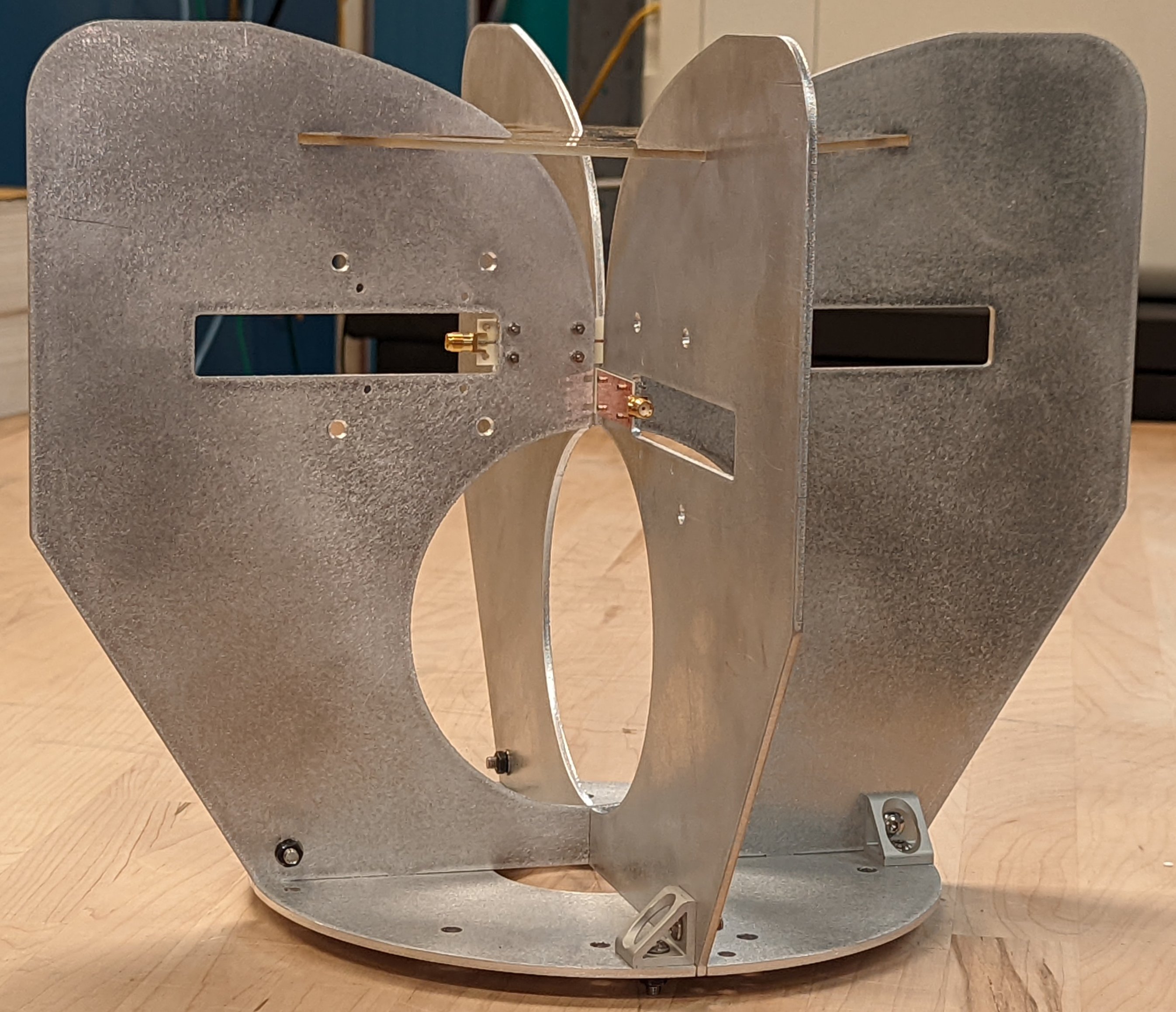
I designed a compact, ultra-wideband (0.3–1.5 GHz), low-cost, low-loss antenna feed for large-N interferometric radio telescopes. Its bandwidth, cost, and size, makes it perfectly suitable for large arrays of small dishes such as modern 21 cm observatories. The design was developed for, and is being used in the CHORD telescope. Published in Journal of Astronomical Instrumentation (2023).
HERA
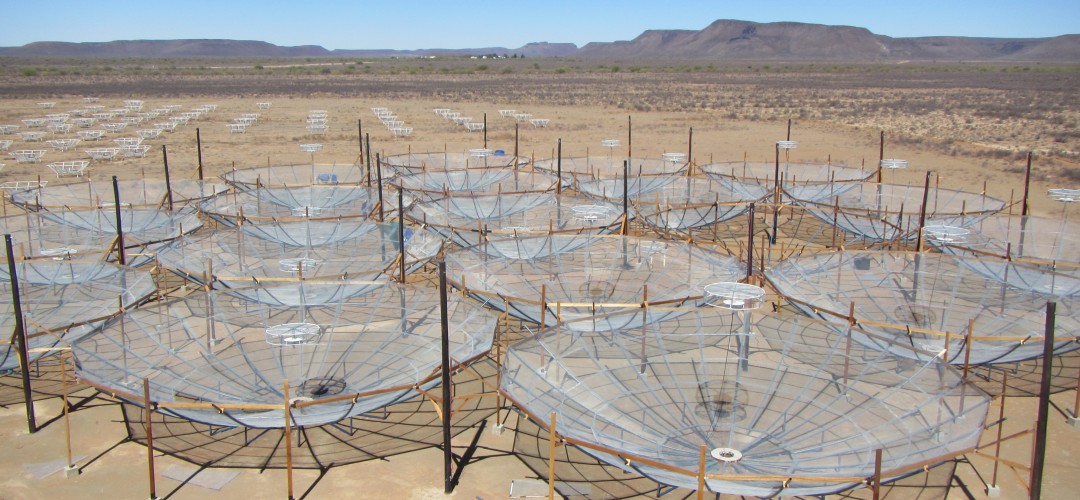
The Hydrogen Epoch of Reionization Array (HERA) is a radio interferometer located in South Africa's Karoo desert, designed to detect the 21 cm signal from neutral hydrogen during the Epoch of Reionization. My contribution for the collaboration has been broad, ranging from simulating proposed hardware modifications, modeling and suppressing mutual coupling, assembling software pipelines, monitoring data acquisition, and visiting the site for in-person maintenance.
CHORD
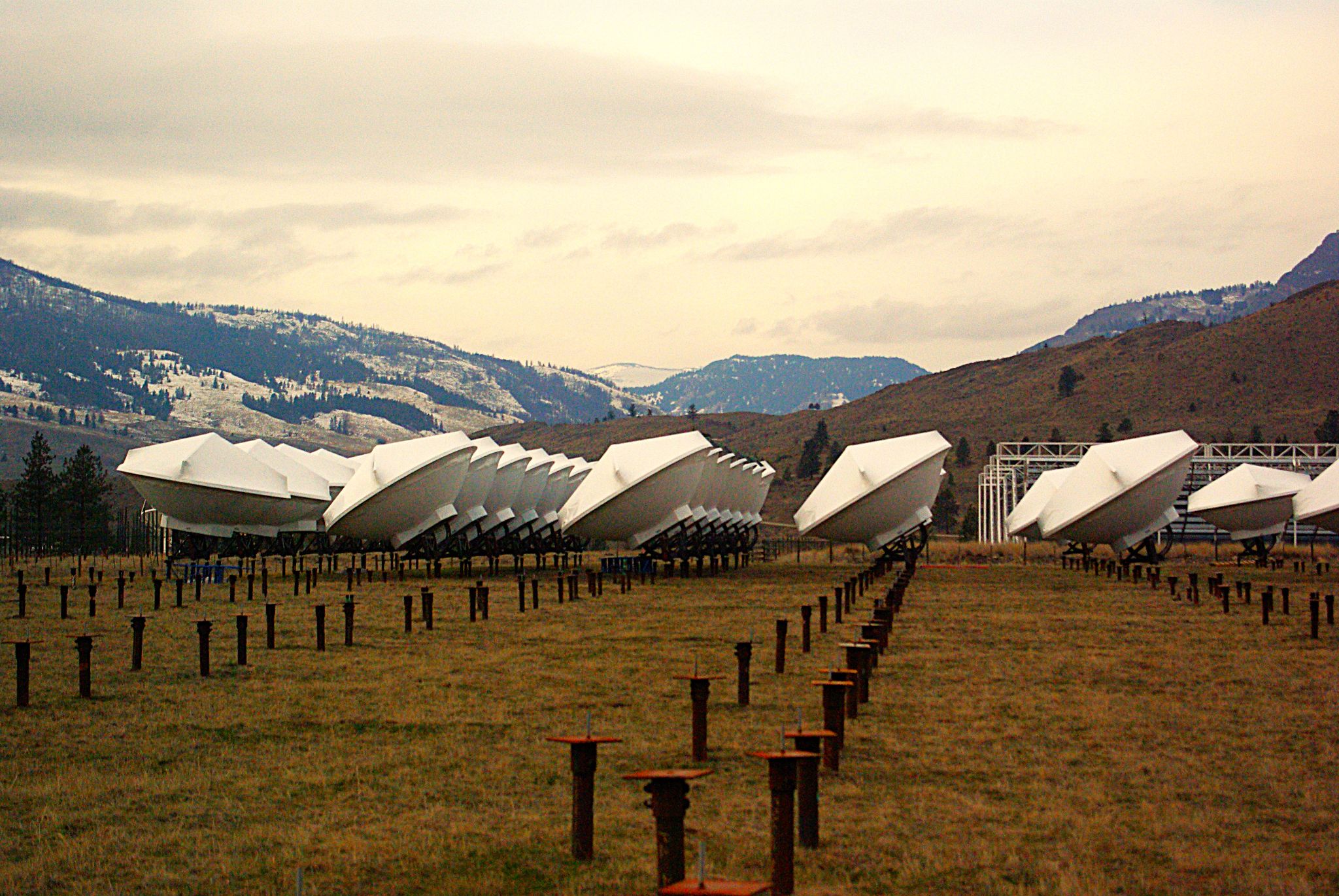
The Canadian Hydrogen Observatory and Radio-transient Detector (CHORD) is a next-generation radio telescope designed for cosmological surveys of post-reionization neutral hydrogen and detection of fast radio bursts, currently being built in Penticton, BC. I designed the feed, chose the unconventional dish shape to minimize mutual coupling, and helped determine the optimal array layout via simulation.
Teaching
Directed Reading Program
I mentored undergraduate students through the Physics Directed Reading Program at the University of Toronto, guiding them through topics in observational cosmology including radio interferometry, 21 cm cosmology, and data analysis techniques.
Dunlap Instrumentation Summer School
I designed and led a workshop on radio signal detection and the properties of thermal radiation and noise as part of the Dunlap Instrumentation Summer School. The workshop provided hands-on experience with radio instrumentation concepts for graduate students.
Teaching Assistant
I served as a teaching assistant for a wide range of physics courses, from introductory courses like The Magic of Physics and The Physics of Music to advanced courses like Current Interpretations of Quantum Mechanics. See the CV section for the full list.
Demos
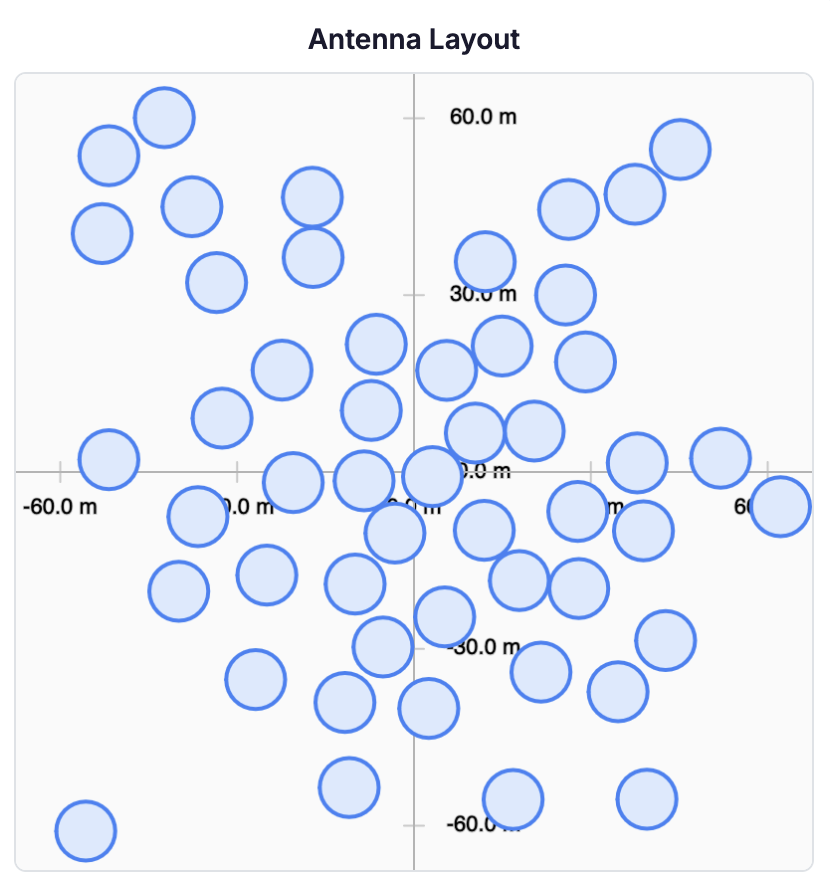
Antenna PSF Applet
An interactive tool for exploring antenna array configurations and their point spread functions. Design array layouts and visualize how different configurations affect the instrument's response.
Curriculum Vitae
Canadian citizen · U.S. green-card holder · French, English
vimackay@mit.edu · ORCID: 0000-0002-3317-5347
Research Interests
I am a cosmologist and radio astronomer specializing in 21 cm experiments and transient detection. I design arrays and antenna hardware, and develop analysis methods addressing challenges such as mutual coupling mitigation and foreground suppression. My research sits at the intersection of physics, engineering, and data science.
I am part of the HERA and CHORD collaborations; previously, CHIME and HIRAX.
Positions
Education and Training
Awards and Funding
Publications and Preprints
† Collaboration paper †† Student-advised paper
- et al. Oct. 15, 2026. “Properties and limitations of linear models for mutual coupling in 21 cm arrays.” Submitted to ApJ on 18 October 2026. arXiv: 2610.22197.
- † Bandura, Kevin, […], , et al. Aug. 17, 2026. “Overview of the Canadian hydrogen observatory and radio transient detector (CHORD) project.” In: Radio Telescopes, Technologies, and Methods, Proceedings of SPIE 14153, 141531A.
- et al. Feb. 2026. “Complete Sampling of the uv Plane with Realistic Radio Arrays: Introducing the RULES Algorithm, with Application to 21 cm Foreground Wedge Removal.” In: The Astrophysical Journal 999.1, 96.
- †† Berger, Sabrina, Lasinski, Arianna, , et al. Jan. 2026. “First use of GPS satellites for beam calibration of radio dish telescopes.” In: Publications of the Astronomical Society of Australia 43, e016.
- † Kim, Honggeun, […], , et al. Nov. 2025. “Exploring One-point Statistics in HERA Phase I Data: Effects of Foregrounds and Systematics on Measuring One-point Statistics.” In: The Astrophysical Journal 993.2, 189.
- et al. Nov. 2023. “Low-Cost, Low-Loss, Ultra-Wideband Compact Feed for Interferometric Radio Telescopes.” In: Journal of Astronomical Instrumentation 12.4, 2350008.
- Lai, Mark, et al. Aug. 2023. “0.3–1.5-GHz LNA With Wideband Noise and Power Matching for Radio Astronomy.” In: IEEE Microwave and Wireless Technology Letters 33.8, pp. 1163–1166.
- † Crichton, Devin, […], , et al. Jan. 2022. “Hydrogen Intensity and Real-Time Analysis Experiment: 256-Element Array Status and Overview.” In: Journal of Astronomical Telescopes, Instruments, and Systems 8.1, 011019.
- † Saliwanchik, Benjamin R. B., […], , et al. Jan. 2021. “Mechanical and Optical Design of the HIRAX Radio Telescope.” In: Ground-Based and Airborne Telescopes VIII, SPIE 11445, 114455O.
- Cytrynbaum, Eric N., et al. July 2019. “Double-wave reentry in excitable media.” In: Chaos: An Interdisciplinary Journal of Nonlinear Science 29.7, 073103.
Talks
† Invited †† Outreach
-
† TASTY, Department of Astronomy & Astrophysics, University of Toronto Toronto, ON, Canada, 2026“How Antenna Layout Can Help Reveal the 21 cm Universe”
-
† KIPAC Seminar, Stanford University Stanford, CA, USA, 2026“Instrument Design Theory for 21 cm Cosmology”
-
National Radio Science Meeting Boulder, CO, USA, 2026“Complete Sampling of the uv Plane with Realistic Radio Arrays: Introducing the RULES Algorithm, with Application to 21 cm Foreground Wedge Removal”
-
†† Astronomy on Tap Rhode Island Providence, RI, USA, 2026“The Blurriest Pictures Ever Taken”
-
Cosmology on Safari Hluhluwe, South Africa, 2025“An algorithm to produce uv-complete arrays”
-
National Radio Science Meeting Boulder, CO, USA, 2023“An Ultra-Wideband, Low-Loss, Low-Cost Feed Design for Large-N, Small-D Observatories, and Implementation on CHORD”
-
URSI Atlantic Radio Science Meeting Gran Canaria, Spain, 2022“Hardware Design and Array Layout for CHORD: the Canadian Hydrogen Observatory and Radio-transient Detector”
-
National Radio Science Meeting Boulder, CO, USA, 2022“Design Considerations for CHORD: the Canadian Hydrogen Observatory and Radio-transient Detector”
-
†† Astronomy on Tap NYC: Cosmic Happy Hour New York, NY, USA, 2022“The Hubble Tension: A Crisis of Cosmic Proportions”
-
† Astronomy and Space Physics Seminar, Kansas University Lawrence, KS, USA, 2021“Cosmology and Detection of Radio Transients with CHORD: Science Goals and Design Considerations”
-
Summer Colloquium, Department of Physics, University of Toronto Toronto, ON, Canada, 2020“Development of CHORD: the Canadian Hydrogen Observatory and Radio-transient Detector”
-
Science at Low Frequencies Conference Fully online conference, 2020“The Canadian Hydrogen Observatory and Radio-transient Detector (CHORD): Feed and Dish Design and Trade-offs”
-
IEEE AP-S/URSI Conference Montréal, QC, Canada, 2020“A Miniaturized Ultra-Wideband, Low-Loss, Low-Cost Feed for Astrophysics”
-
†† Cosmos From Your Couch Toronto, ON, Canada, 2020“Peeking into the Invisible Universe with Radio Astronomy”
-
Society for Mathematical Biology Annual Meeting Montréal, QC, Canada, 2019“Double-wave reentry in excitable media”
Teaching
| PHY293: Waves and Modern Physics | Fall 2020, Fall 2022 |
| PHY250: Electricity and Magnetism | Summer 2022 |
| PHY294: Quantum and Thermal Physics | Winter 2022 |
| PHY151: Foundations of Physics I | Fall 2018, Fall 2021 |
| PHY205: The Physics of Everyday Life | Summer 2021 |
| PHY491/1491: Current Interpretations of Quantum Mechanics | Winter 2021 |
| PHY207: The Physics of Music | Winter 2020, Winter 2021 |
| PHY100: The Magic of Physics | Fall 2019 |
| PHY132: Introduction to Physics II | Winter 2019 |
Community Involvement and Service Work
-
Member of the organizing committee for the 2021 Dunlap Instrumentation Lectures
Helping organize a week-long virtual lecture series with invited speakers and visiting student researchers
-
Judge at young scientist competitions
2021 Canada-Wide Science Fair (CWSF); 2021 Canadian Undergraduate Physics Conference (CUPC)
-
President of the Physics Graduate Student Association, 2019–2020
Organizing social activities for physics graduate students, representing them at the graduate student union
-
Other volunteering
Leading lab tours for University of Toronto's AstroTours; representing the Dunlap Institute at the 2022 Black Excellence in STEM and Medicine (BE-STEMM) conference career fair; discussing with grade school students on video calls as part of the Skype a Scientist program